
Decolonizing the Curriculum in the Light of the Incarnation
On March 9, 2015, protests erupted among students of the University of Cape Town, South Africa under the slogan #RhodesMustFall. They demanded that the statue of British colonial-era politician and diamond magnate Cecil Rhodes be removed from a prominent place on their campus. The protest was given further impetus internationally by movements such as Black Lives Matter as well as reactions to widespread accusations of institutional racism. In addition to inspiring demands for other statues to be torn down or relocated—from Edward Colson in Bristol, England, to Hannah Duston in New Hampshire—the broader demands of the protest gave birth to an academic movement known as “Decolonizing the Curriculum.”
This term itself is contested and therefore difficult to define. For its supporters, Decolonizing the Curriculum (DtC) entails the balancing and broadening of the academic curriculum in schools and universities from an exclusively Western-centered canon of ideas and texts to include the philosophy, worldviews, and history of other cultures. For its skeptics, it is another front in a seemingly endless culture war, which may threaten to undermine the foundations of Western Christian civilization itself. As one of the most discussed issues in education today, it is timely for us who work in Catholic schools and universities to consider the issue in the light of our faith, despite the risk of controversy. In seeking a balanced way forward, reflection on the wonder of the Incarnation may provide a way out the impasse.
Antiquum Ministerium: Instituting the Ministry of Catechist
On May 10, 2021, Pope Francis formally instituted the ministry of catechist with the apostolic letter Antiquum Ministerium, which he issued motu proprio, or on his own initiative and under his personal signature. An initial reaction to the formal institution of the role of catechist might be to wonder, “So what’s new?” The role of catechist has been understood as a ministry of the Church since the first century.
In the first sentence of this apostolic letter, Pope Francis refers to catechesis as an ancient ministry.[1] Indeed, twice in the Gospel of Luke, twice in his Acts of the Apostles, and twice in Paul’s Epistle to the Galatians the precise use of different forms of the Greek verb katécheó, meaning to teach by word of mouth and from which the term “catechesis” is derived, clearly identifies the roots of this ancient ministry and describes its parameters. The ministry of catechesis, then, from the earliest days of the Church seems specifically included among the ways the disciples of Christ could be faithful to his imperative to “go . . . and make disciples of all nations, baptizing them in the name of the Father, and of the Son, and of the Holy Spirit, teaching them to observe all that I have commanded you” (Mt 28:19; emphasis added).
Finding God in an Unexpected Place
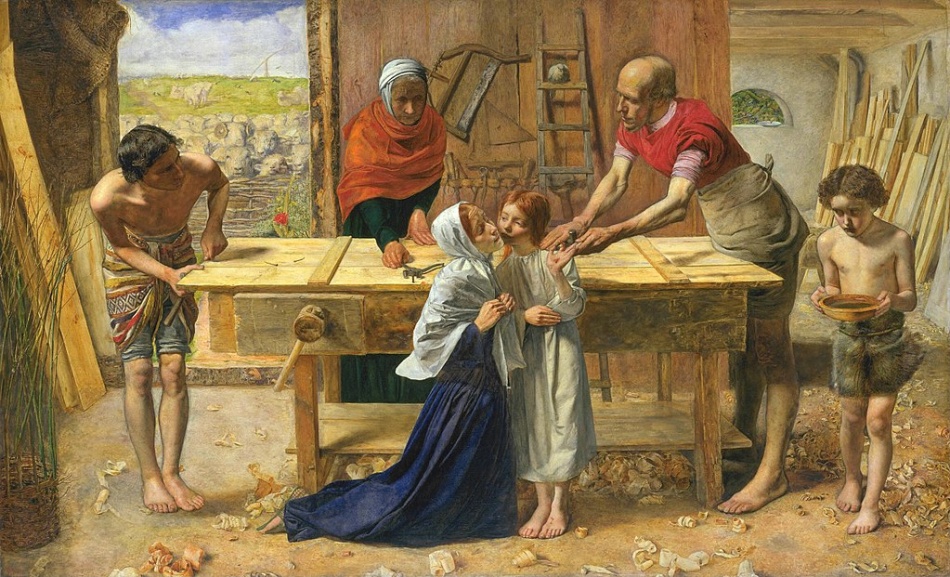 When John Everett Millais’ Christ in the House of His Parents was first displayed at the Royal Academy, the public response was near-universal revulsion.
Editor’s Reflections: On Incarnational Coherence
Beneath the Basilica of the Annunciation in Nazareth is the place where tradition tells us the Angel appeared to the Blessed Virgin Mary. An altar stands in this grotto, inscribed with these words: “verbum caro hic factum est” (the Word became flesh here).
AD: Parish App that Keeps You Connected--Free Download
Stay connected to your parish or school. Download myParishApp here for free.
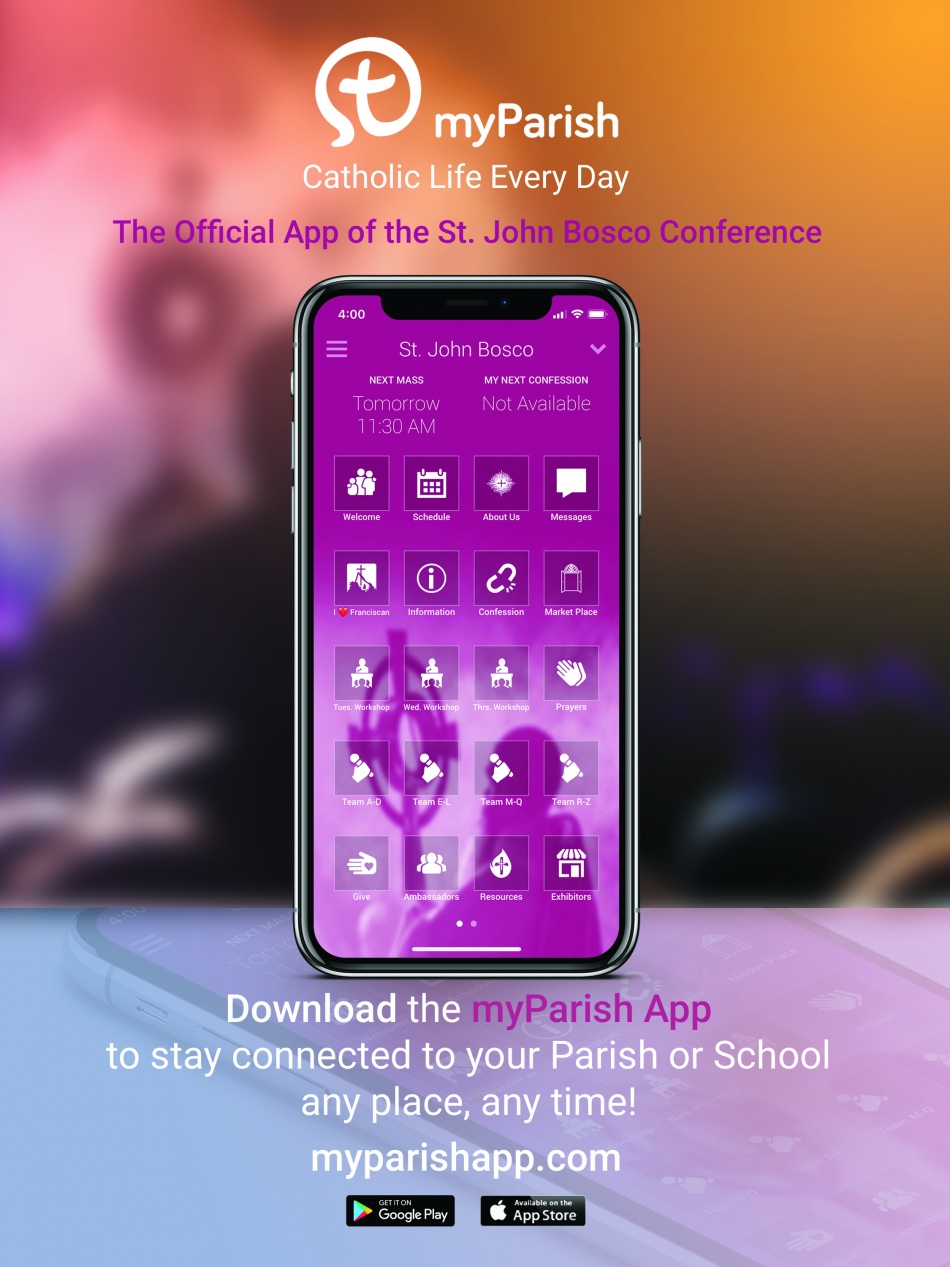
This is a paid advertisement in the July-September 2021 issue. Advertisements should not be viewed as endorsements from the publisher.
Youth & Young Adult Ministry: Spiritual Multiplication: What Exactly Are We Talking About?
 How do you bring someone to faith in Jesus Christ? As Christians, this is a question we should have a ready-made answer for.
Catholic Schools: Lessons Learned from an Iraqi School
"The Church is alive in Iraz, and Christ is alive in Iraq."
Pope Francis, March 7, 2021 Erbil, Iraz
On my fiftieth birthday, I received as a gift a detailed map of the world. The map holds pins of places traveled on behalf of Franciscan University of Steubenville and the names of cohort members in the Master of Catholic Leadership graduate program, of which I am the director. Each name on the map is significant as is the story of how they have come to their leadership role.
In March of 2021, I had the privilege of adding my own pin to this map. Along with Fr. David Pivonka, TOR, and Dr. Daniel Kempton, Vice President for Academic Affairs, I traveled to Erbil, Iraq at the invitation of Archbishop Bashar Warda. Our trip coincided with Pope Francis’s historic visit to Iraq.
The Door Will Be Opened
I walked along the forbidden streets of one of Philadelphia’s most crime-ridden neighborhoods while being greeted respectfully by neighbors. They knew I lived at the church and, despite countless warnings about the safety of this community, I encountered only joyful faces. One of the first conversations I had as I walked from the El station to the church rectory, where I lived with other young adults, was with a seven-year-old girl, who asked me: “Is God a father and Mary a mother?”
Yes, Mary is a mother, and she is the mother of all of us; she is Comforter of the Afflicted and Refuge for Sinners. She is Mother of Divine Grace and Mother Most Pure. Her mission as Mother continues in the world today, through the Church.[1] This is why we turn to the Church in time of need—we bring our spiritual, material, social, and emotional needs to the Church.
“The church has always been here,” another man explained to me, “but the doors were always locked. No one was there.” It was as if our neighbors intrinsically knew that this grandiose, beautiful building that stretched up to the heavens was meant to be their saving grace; that they should be able to look to the church in time of need and find comfort (Is 66:13); that they should be able to knock and have the door open unto them (Mt 7:7).
From the Shepherds: Formation in Digital Media
In 2020, the Shepherds of the Church gave us a treasure in the new Directory for Catechesis. Dr. Farey was a member of the working party for the bishops on the new Directory and shares additional reflections on its practical implications in this issue and the next two issues.
Measuring Success
There is an uncomfortable reality of spiritual multiplication with which we catechists, ministers, and missionaries must wrestle. That reality is this: spiritual multiplication produces results, but not always in the way we imagine.
