

For the Jubilee of Catechists
Editor’s Note: The Jubilee year of hope comes to an end on January 6, 2026. In September 2025, the Church celebrated the Jubilee of Catechists, asking God’s grace upon all those who teach the faith. We are happy to republish below the homily of Pope Leo XIV given on this important occasion in the life of the Church and in the lives of each of us who have been invited by God to form others in the Christian life.
 The words of Jesus convey to us how God sees the world, at every moment and in every place. We heard in the Gospel (Lk 16:19–31) that his eyes observe a poor man and a rich man: seeing one dying of hunger and the other gorging himself in front of him, the elegant clothes of one and the sores of the other licked by dogs (cf. Lk 16:19–21). But the Lord looks into the hearts of people, and through his eyes, we can also recognize one who is in need and one who is indifferent. Lazarus is forgotten by the one right there before him, just beyond the doorway of his house, and yet God is close to him and remembers his name. On the other hand, the man who lives in abundance is nameless, because he has lost himself by forgetting his neighbor. He is lost in the thoughts of his heart: full of things and empty of love. His possessions do not make him a good person.
The story that Christ tells us is, unfortunately, very relevant today. At the doorstep of today’s opulence stands the misery of entire peoples, ravaged by war and exploitation. Through the centuries, nothing seems to have changed: How many Lazaruses die before the greed that forgets justice, before profits that trample on charity, and before riches that are blind to the pain of the poor! Yet the Gospel assures us that Lazarus’ sufferings will come to an end. His pains end just as the rich man’s revelry ends, and God does justice to both: “The poor man died and was carried by the angels to Abraham’s side. The rich man also died and was buried” (v. 22). The Church tirelessly proclaims this word of the Lord, so that it may convert our hearts.
Dear friends, by a remarkable coincidence, this same Gospel passage was also proclaimed during the Jubilee of Catechists in the Holy Year of Mercy. Addressing pilgrims who had come to Rome for the occasion, Pope Francis emphasized that God redeems the world from all evil by giving his life for our salvation. God’s saving work is the beginning of our mission because it invites us to give of ourselves for the good of all. The Pope said to the catechists: This is the center by “which everything revolves, this beating heart which gives life to everything is the Paschal proclamation, the first proclamation: The Lord Jesus is risen, the Lord Jesus loves you, and he has given his life for you; risen and alive, he is close to you and waits for you every day” (Homily, 25 September 2016). These words help us to reflect on the dialogue in the Gospel between the rich man and Abraham. The rich man’s plea to save his brothers becomes a call to action for us.
All permissions have been sought for reprint.
Copyright © Dicastero per la Comunicazione - Libreria Editrice Vaticana.
From the Shepherds—Fearing the Fear of the Lord in Catechetical Instruction
 At a regional bishop’s meeting that i recently attended, an animated dialogue took place regarding different catechetical approaches currently employed in our Catholic schools. The discussion was wide ranging, but several bishops lamented the all-too-common absence of any treatment of the “fear of the Lord.” It appears that many texts avoid all but a passing reference to it. What also became apparent is that, in numerous cases, the reason for its exclusion is that many teachers and catechists simply don’t understand it themselves! Many intentionally omit it in order to protect people, especially children, from what they judge to be a punitive focus that is out of keeping with modern religious sensibilities. The teaching is thought to be inherently Jansenist, and they fear its effect on children and catechumens. This is a tragedy, as nothing could be further from the truth.
Fear of the Lord is a critically important disposition of a person toward God. It acknowledges the infinite glory and majesty of the Supreme Being, the One Creator God who effortlessly sustains all that he has created in being. He is mysterious beyond comprehension, an all-consuming fire, at once terrible in power and fascinating beyond imagination. As the Catechism affirms, “we firmly believe and confess without reservation that there is only one true God, eternal infinite (immensus) and unchangeable, incomprehensible, almighty and ineffable, the Father and the Son and the Holy Spirit; three persons indeed, but one essence, substance or nature entirely simple” (202) and one “infinitely above everything that we can understand or say” (206).
To truly grasp the immense mystery of God’s infinite splendor and grandeur is to be amazed. It is to be filled with deep religious awe. God is discovered as the numinous, omnipresent presence to which every creature owes its existence and to whom they must answer. The Catechism affirms that, when faced with God’s presence, humans discover their own insignificance and recognize God’s holiness (see 208). This is, of course, absolutely true and profoundly important. But it is also where the confusion begins.
From The Shepherds—Discipleship According to Jesus
 The term “disciple” is a translation of the Greek word mathetes, which means a student or follower of a teacher. Of course, we know that Jesus was called a teacher or Rabbi by many, and he had a good number of disciples. However, his manner of teaching was a bit different from other teachers of his time. He did not sit and wait for others to come to him. Rather, he called or summoned disciples, and then he had them follow him, not only by following his teachings but literally and physically following him around. Thus, this teacher was a unique kind of teacher, which would mean that his disciple will be a unique kind of disciple.
Personally, I have always loved school and reading and studying—sitting still and learning is one thing that I believe I have been pretty good at. However, the idea of getting up and moving around wherever someone else might lead me seems a bit demanding and discomforting. Yet, that is the kind of disciple the Lord wants me to be.
How can we describe Jesus’ program of formation for his disciples? These elements come from some Gospel texts where he specifically addresses his followers and often challenges them.
From the Shepherds— Hope: A Call to Responsibility
 The Cries of the Oppressed
“What is our sin that God punishes us with such a trial? Where is the just God? Does he not see the injustices inflicted upon us? What fault have these children committed to be left without a roof to shelter them as they sleep? What is the fate of our children, who have been deprived of everything, even their schools?”
These were the desperate cries of families who sought refuge at St. Joseph Cathedral on the night of August 7, 2014. They were fleeing the brutal attacks of ISIS, faced with an impossible choice: renounce their faith in Jesus Christ, pay a tax of servitude, or face certain death. Leaving everything behind, they clung only to their faith in Jesus Christ as their Savior.
Our response was clear and unwavering: “Our God has not abandoned you. He has accompanied you, ensuring your safe arrival here with us. Our faith and hope remain steadfast that He will return with you to your homes in victory. Many have wielded the sword against faith in Jesus Christ, but they have been defeated by the steadfastness of believers in him.” We reassured them with the words of Jesus: “I have told you these things, so that in me you may have peace. In this world you will have trouble. But take heart! I have overcome the world” (Jn 16:33).
From the Shepherds— Four Pillars for Building a Eucharistic Life
 At the end of his public life, Jesus sent his apostles into the world to preach, teach, baptize, and share the life he had given them (see Mt 28:16–20).
At the end of his public life, Jesus sent his apostles into the world to preach, teach, baptize, and share the life he had given them (see Mt 28:16–20). This is the divine model: people are called to God to be formed by him and then sent to bring others to share in that joyful life. Teachers of the faith in particular enjoy both the joys and the responsibilities of living and sharing that life.
The Church in the United States finds herself in a similar position as those first disciples in this, the final year of the Eucharistic Revival: it is the Year of Mission. After some time of diocesan and parish renewal, each of us is being charged to go forth into the world to bring Christ to others. Having been formed in these last years by our Eucharistic prayer and study, we are now commissioned as missionaries, sent to invite others to experience the great joy of knowing and serving Christ in the Blessed Sacrament of the Eucharist.
In the case of those already engaged in catechetical ministry, this call will also take the form of renewing and deepening our own understanding, methods, and engagement with those whom we teach. To such an end, there are four main “pillars” proposed to us to guide our way and to help keep us stable in our pursuits of drawing people to Christ.
Pillar I: Eucharistic Encounter
The first of these pillars is Eucharistic Encounter. This pillar is meant to encourage and continue what we have been stressing this entire revival: we need to encounter Christ in the Eucharist—we need to meet him in his presence and spend time with him. This is the start and end of all our endeavors, for the Eucharist is the “source and summit of the Christian life.”[1] As the old saying goes, nemo dat quod non habet; nobody gives what he doesn’t have. In other words, we cannot expect to lead people to Christ if we are not spending time with him ourselves.
Catechists can help their students to grow in this area by helping them to participate worthily and well at Holy Mass, attending daily if possible; by going to adoration and benediction of the Blessed Sacrament; and by making short visits to the tabernacle, even spiritually if you cannot do so physically. Frequent confession is a must in this area as well. Good and helpful explanations of what participating in these sacramental realities mean will of course be necessary and will go a long way.
From the Shepherds— The Rosary & The New Evangelization
 The joy and youthfulness of the Catholic priesthood never fade.
From the Shepherds — A Broad View Makes for Fruitful Ministry

From the Shepherds — Learning From the Charism of St. John Bosco
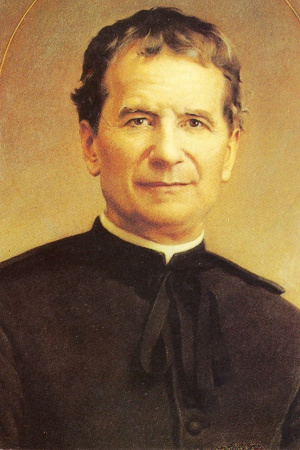 In the Latin language there is a saying that could also be applied to our work as catechists: nomen est omen. This means that the name also reflects the inner essence of a person or a thing. In other words, the name speaks for itself. The name of St.
From the Shepherds: Serving the Poor: Taking Five Steps with Two Feet
When I served as director of André House, a ministry of hospitality to the poor and homeless in downtown Phoenix, we often spoke about “the two feet of service”: direct service to those in need and working for justice and a long-term solution. Both are important, and each one informs and strengthens the other. Inspired by Dorothy Day and under the patronage of St. André Bessette, André House leaned heavily on the foot of service. We labored all day to bring comfort, food, water, safety, and hospitality to the hundreds of people who came to us daily.
From the Shepherds: Bearing Fruit
Shortly after his election as pope, His Holiness Pope Francis wrote the apostolic exhortation Evangelii Gaudium (The Joy of the Gospel), which is the programmatic document for his pontificate.[1] It follows the lines of thought of the Aparecida Document, which was written in response to the difficulties the Church in Latin America was having in transmitting the faith from one generation to another.
