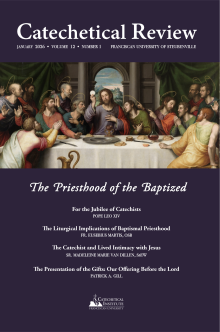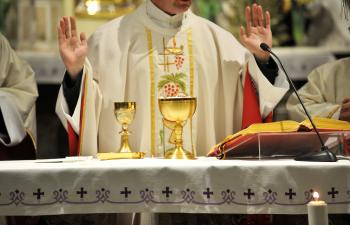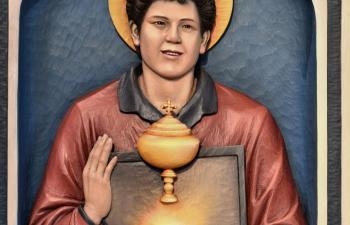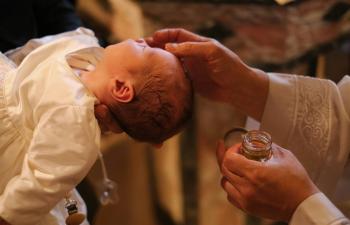
 In the Sacrament of Baptism, something extraordinary happens that many Catholics, including children, don’t fully understand. When the baptized are anointed with sacred chrism, they share in Christ’s work as priest, prophet, and king. This participation in Christ’s priestly mission, often called the “priesthood of the baptized” or the “common priesthood of the faithful,” is not merely theological terminology. It is a fundamental identity that should shape how children understand their role in God’s family and in the world.
Yet, in many catechetical settings, we rush past this profound truth, focusing instead on preparing children for the next sacrament or teaching them about the ministerial priesthood without helping them understand their own priestly calling. In doing so, we miss the opportunity to help young people discover their dignity as baptized Catholics and their mission to serve God and neighbor.
Starting with the Kerygma
Before we can help children understand their priestly identity, we must first ensure they have encountered Jesus Christ personally through the kerygma. As Pope Francis reminds us in Christus Vivit (“Christ Is Alive”), the fundamental message is simple yet transformative: “God loves you”; “Christ, out of love, sacrificed himself completely in order to save you”; and “Christ is alive!”[1] When children understand this core message—that they are beloved by God and called into relationship with him—everything else, including their baptismal priesthood, finds its proper context.
The priesthood of the baptized isn’t about what children will do when they grow up; it’s about who they are right now as beloved sons and daughters of God. This identity shapes how they relate to God, to others, and to the world around them. When we begin with the kerygma, children understand that their priestly calling flows from love—God’s love for them and their response of love to God and neighbor.
The rest of this online article is available for current Guild members.

This article is from The Catechetical Review (Online Edition ISSN 2379-6324) and may be copied for catechetical purposes only. It may not be reprinted in another published work without the permission of The Catechetical Review by contacting [email protected]