

Evangelization: Clear and Simple
"We are living now in an age of inventions, and we no longer have to take the trouble of climbing stairs … I wanted to find an elevator which would raise me to Jesus, for I am too small to climb the rough stairway of perfection … The elevator which must raise me to heaven is Your arms, O Jesus! And for this I had no need to grow up, but rather I had to remain little and become this more and more." St. Thérèse of Lisieux, The Story of a Soul
photo of crowd going up escalator by Johannes Wünsch at Pixabay.com
These simple but profound words of St. Thérèse the Little Flower illustrate something revolutionary I’ve come to understand about how to be effective and fruitful in our evangelical efforts in today's highly secularized culture. There is an easier and more efficient way to invite this generation to open their hearts to Jesus Christ and, by grace, lead them to a profound life changing conversion.
To embrace this simple approach to evangelization we will first have to come to terms with the fact that we are no longer in Christendom—cultural Catholicism is dead. Therefore, the conditions for a path to conversion are very different than in the past: “In our days... in vast areas of the world the faith is in danger of dying out like a flame, which no longer has fuel... God is disappearing from the human horizon and, with the dimming of the light, which comes from God, humanity is losing its bearings, with increasingly evident destructive effects.[1]
I have seen, in my commitment to evangelizing students on campuses across Canada for the last thirty years, that there is a growing resistance and opposition to the Church and what she proposes. What is apparent is the lack of interest in the Church’s devotions that at one time led our people to greater ongoing conversion. Many of our own people don't see the relevance of our sacraments, they oppose our doctrines, they dislike our leaders, and they think we spend too much money on our beautiful churches.
What is evident is the growing polarization between Catholics living the faith and the great multitudes that have wandered far away from the Church. As a result, we must no longer expect that the common pathway to a Catholic life will continue to be the same. As the gap between believers and non-believers grows, evangelizers must be ready to navigate conversions that are significantly more decisive and dramatic.
While the tried and tested path to deeper and ongoing conversion is still relevant for those established within the Church, for the great multitudes who are not in the Church, who do not know Christ or do not know him well enough, let us consider a quicker path. St. Thérèse, who was inspired by the heroism and strength of character of the great saints, thought herself unable to follow them: “I am too small to climb the rough stairway of perfection.”[2] She discovered a new way to perfection by simply presenting herself to the Father as a little child, asking to be taken up in his arms to experience his love: “The elevator which must raise me to heaven is your arms, O Jesus!”[3]
Recognizing how far many in this generation have wandered away from the faith, let us invite them to enter by way of an elevator, opening their lives to a relationship with Jesus Christ. This relationship of love will open their eyes to the beauty of the Catholic Church and a greater desire for deeper and ongoing conversion. More clearly stated, we must lead with evangelization and follow up with catechesis.
The Synod on the New Evangelization in 2012 attempted to bring clarity to the place of evangelization within the Church. What became evident to those participating was the confusion surrounding the message we are to proclaim. To help bring about greater clarity, the Synod proposed to Pope Benedict XVI the need to develop a “systematic teaching on the kerygma” that could be used to form the faithful in their work of evangelization.[4]
In my experience, evangelization is fruitful and effective when the evangelizer speaks clearly and simply and has confidence in the supernatural power of the Gospel message to change lives. Let’s examine five principles of an effective and fruitful process of evangelization that begins with an encounter with Jesus.
Our Hearts Were Burning Within Us: A Reflection on Discipleship
Do you feel the Holy Spirit working? Do you sense that deeper calling, that desire for renewal, that burning within your heart? Yes, it is the same burning that the disciples on the road to Emmaus felt as their Lord and Savior journeyed with them.
Our Hearts Were Burning Within Us was written twenty years ago as a prophetic and challenging document calling parishes and dioceses to re-examine the faith formation they are providing to children and adults so that the right priority and emphasis was being lived out. When we see adult faith formation taking a primary role in catechesis, we see adults being transformed by the Gospel to become missionary disciples who go forth to transform the world. In many ways, this document has yet to be fully implemented and embraced, but as it continues to be, parishes and dioceses will see wonderful fruits of disciples ready to run back to the Church, to embrace the call of Christ to evangelize.
If you are anything like me, for much of your journey and even today, we fail to recognize the many times that Christ is present with us in our midst. We have a sense (a burning) of his presence but we aren’t quite ready to fully give ourselves (our work, our ministry, our concerns, etc.) over to him. Just as the disciples wondered, “could it really be true, could he really have risen from the dead?” so do we wonder, “can he really free me from my sin, will he really transform the lives and hearts of those I minister to?” Our work in adult faith formation, as it is in our own lives, is to help form “women and men of prayer whose faith is alive and vital, grounded in a deep commitment to the person and message of Jesus” (2).
How an Evangelizing RCIA Process Can Change the Culture of Your Parish
Our parish recently hosted a major event in collaboration with two local parishes in our area. The speaker was well-known; and as the volunteers gathered in a circle with him to pray before the event, I looked up at one point and noticed something striking: a full seventy-five percent of the volunteers standing in the circle were past RCIA participants! As the RCIA Director of this small to mid-sized parish of around six hundred families, I was thrilled. I silently added a prayer of thanksgiving to the Lord for doing great things for us, because I was certainly filled with joy! (cf. Ps 126:3). The words of Pope St. John Paul II ring true in this regard, “In both accepting and proclaiming the Gospel in the power of the Spirit the Church becomes at one and the same time an ‘evangelizing and evangelized’ community, and for this very reason, she is made the servant of all.”[1] Reflecting back on the journey we have traveled to reach this point, I can say with some satisfaction that we have come a long way. Admittedly, we still have far to go. Rome, as they say, was not built in a day. The Rite of Christian Initiation of Adults is most certainly a process for the parish, as well as for the RCIA participants. Beginning the Process Transitioning from a nine-month RCIA process (with a combined Breaking Open the Word/catechetical session on Sundays) to a year-round process (with extended catechesis on a weeknight, including childcare), took a lot of prayer, courage, and organization. This change has made a positive impact on our catechists, catechesis, and the parish as a whole. Included in this adventure was a fair amount of hand-holding and accompaniment by my mentor, especially in the beginning. She should be canonized for her encouragement and patience with me! Eight years later, our team can now look back and say with enthusiasm and a fair amount of zeal that it was ALL worth it! Once we synchronized our methodology with the rhythm of a year-round model for adults, we moved on to building the catechetical team. We then began to incrementally add the following: a hospitality team, intercessory prayer team, set up team, RCIA adapted for teens, RCIA adapted for children (Jr. High-6/7/8 combo, Children-3/4/5 combo), and RICA (for adults in Spanish). All of the above are offered on the same night at the same time in our parish in order to accommodate entire families. Along the way, I was invited by the pastor to become a staff member. Initially it was five hours per week, then it was increased to nineteen and a half hours. We even obtained…gasp…a real office! Finally, my hours were increased to a full-time, thirty-hour per week position with benefits. This is what it takes to direct a full-scale RCIA process in a parish.[2] Our newest endeavor, due to begin this spring, is our neophyte team. These catechists will be present during the Mystagogy sessions where they will become acquainted with the neophytes. After Pentecost, this team will then accompany the new Catholics during their Neophyte Year by meeting regularly with them on a fixed schedule, taking them deeper into discipleship, and beginning to move them toward apostolic works according to the differing charisms of the individuals.
The Spiritual Life: Madeleine Delbrêl, French Mystic and Evangelizer
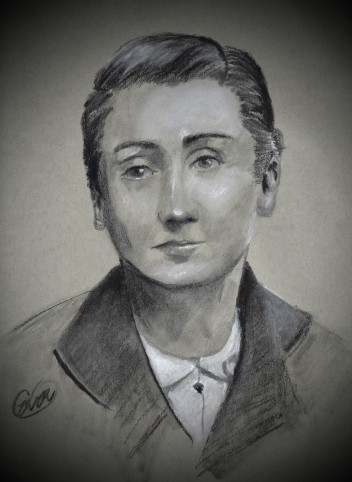 “We, the ordinary people of the streets, believe with all our might that this street, this world, where God has placed us, is our place of holiness.”
Evangelization in the Classroom: A New Approach with New Possibilities

AD: How to Share & Live the Faith with Others
This is a paid advertisement in the January-March 2019 issue. Advertisements should not be viewed as endorsements from the publisher.
Regalándole nuestro corazón a Jesús
Un día hace como 6 años, mientras trabajaba como Director de Formación Religiosa en una parroquia católica rural, estaba en mi oficina echando un vistazo a Facebook. Vi la imagen de un evangelista católico en un malecón público evangelizando a un hombre que portaba un casco de Darth Vader y montado en un monociclo. Por supuesto que tuve que darle clic al link para leer la historia acerca de St. Paul Street Evangelization (Evangelización Callejera San Pablo). Me puse en contacto con el apostolado y eché a andar un equipo en mi parroquia. Admito que en realidad no me esperaba a que la evangelización directa fuera fructífera, o por lo menos que una conversación que duraba 2 minutos con alguien que nunca en mi vida había conocido antes pudiera llevar a una conversión genuina hacia Jesucristo y su Iglesia. Pensé que la mayor parte de nuestro trabajo sería discutir acerca de la doctrina y sembrar semillas. En fin de cuenta, ¿no iba todo el mundo paseando por la calle preguntándose si los católicos adoran a María?
Por lo tanto, no sabía cómo reaccionar cuando, la segunda vez que salí a evangelizar en nuestra comunidad, conocimos a un señor, Tomás, quien acababa de leer el Catecismo de la Iglesia Católica y quería saber más acerca de Jesús. No conocía a ningún católico y tenía demasiado miedo de entrar en un templo católico al azar. Quedé asombrado cuando, tras nuestra explicación del Evangelio, su corazón “ardía dentro” y quiso saber qué hacer a continuación.
¿Cómo íbamos a ayudarle en ese momento a satisfacer su necesidad de Jesús en su vida? Sabía que mi sacerdote no le iba a gustar si mi equipo lo bautizaba allí mismo en ese momento. Pero decirle que se “uniera a un programa” tampoco era una respuesta satisfactoria. Y un programa que comenzaba varias semanas más adelante no se dirigía a su necesidad de una relación con el Salvador quien lo ama ahora mismo.
En su discurso a los obispos de las Filipinas del 18 de febrero del 2011, el Papa Emérito Benedicto XVI declaró que “vuestra gran tarea en la evangelización es proponer una relación personal con Cristo como clave para la realización plena”. Ese momento en la calle quizás no haya sido el momento preciso para bautizar a Tomás, pero sí fue el momento perfecto para presentarle a Jesús. Oramos juntos para agradecerle a Dios por la vida de Tomás, arrepentirnos de nuestros pecados, y pedirle a Cristo a que entrara al corazón de Tomás y que le diera todas las gracias que Dios le tenía guardadas. Lo conducimos hacia Jesús.
Giving Our Hearts to Jesus
One day about 6 years ago, when I worked as a Director of Religious Education for a rural Catholic parish, I was in my office browsing Facebook. I saw an image of a Catholic evangelist on a boardwalk out in public evangelizing a man wearing a Darth Vader helmet and riding a unicycle. Of course, I had to click through the link to read the story about St. Paul Street Evangelization. I contacted the ministry and started a team at my parish. I admit that I didn’t actually expect that direct evangelization would be fruitful, at least I didn’t expect that a 2-minute conversation with someone that I never met could lead to a genuine conversion to Jesus Christ and his Church. I thought most of our work would just be arguing about doctrine and planting seeds. After all, wasn’t everyone walking down the street wondering whether Catholics worship Mary?
Therefore, I didn’t know how to react when, the second time I went out to evangelize in our community, we met a man, Tom, who had just read the Catechism of the Catholic Church and wanted to know more about Jesus. He didn’t know any Catholics and was too afraid to walk into a random Catholic Church. I was floored that after we explained the Gospel, his heart was “burning within him” and he wanted to know what to do next.
How were we going to help him at that moment to satisfy his need for Jesus in his life? I knew my priest wouldn’t be pleased if my team baptized him right then and there. Telling him that he should just “go to a program” wasn’t a satisfactory answer. A program a few weeks distant would not address his need for a relationship with the Savior who loves him right now.
In Pope Emeritus Benedict XVI’s 2011 address to the bishops of the Philippines, he states that “your great task in evangelization is therefore to propose a personal relationship with Christ as key to complete fulfillment.” That moment on the street may not have been the right moment to baptize Tom, but it was the perfect time to introduce him to Jesus. We prayed together to thank God for Tom’s life, repent of our sins, and ask Christ to come into Tom’s heart, to give him all of the graces God had for him. We led him to Jesus.
Accompaniment Made Practical

Encountering God in Catechesis
The most memorable statement from the angry email was, “This is not what my son signed up for.” Three weeks prior to departure, I had finally informed our youth group of some final needs for our summer mission trip to Hardin County, Kentucky: a sleeping pad or air mattress, as we would likely be sleeping on a floor, and a swim suit—mainly for the tarpaulin-screened bucket baths we would be taking. “Kevin McQuiggen’s” mother was distressed by the conditions in which her son would be living for the week of the trip. The theme for the week was Catholic social teaching, so I replied how our “difficulties” for the week would be a good exercise in solidarity with the people with whom we would be staying to try to assuage her objections.
My town has only a few people I would consider “rich.” The population is mainly mid to lower-middle-class. Kevin’s family is solidly middle-class, and his parents are understandably happy that their children have a comfortable life. Kevin was a regular altar-server, but wasn’t involved in much else at our parish. When he did attend some youth activity it was for him primarily a social event. I was somewhat surprised when his mother turned in the paperwork to have him make the trip, really. The first time I had tried to recruit some teens after a Mass he had jokingly asked, “Can’t we just write a check and stay home?”
Find out what happens to Kevin and how God changes his life. And find out about Laura, who believes God doesn't love her...can't love her.
