 In our specific quest for understanding the priesthood of the faithful, we must recognize that the theology of the Church is echoed in her liturgical rituals. The Catechism says, “By Baptism [the faithful] share in the priesthood of Christ, in his prophetic and royal mission” (1268). The Order of Baptism of Children gives us a significant catechesis in the oration for the post-baptismal anointing with sacred chrism: “Almighty God, the Father of our Lord Jesus Christ, has freed you from sin, given you new birth by water and the Holy Spirit, and joined you to his people. He now anoints you with the Chrism of salvation, so that you may remain members of Christ, Priest, Prophet and King, unto eternal life.”[1] Let us not gloss over these words: “Priest, Prophet, and King.”
Seen as a unit, echoes of these three munera (“offices” or “responsibilities”) of Christ are manifest in the life of every Christian. Notice that these munera are given to us during the celebration of the sacrament while we are being anointed with the sacred chrism.
The Baptismal Rite Reminds Us We Are Anointed
We might recall that rituals of anointing come to us from the Old Testament, so if we are going to understand what they mean today, we must consider how they were presented when originally introduced. We must read and reread 1 Samuel 10. We must consider priestly anointing in Exodus 29 and Leviticus 8. We must reflect on what Jacob’s anointing in Genesis 28 contributes to our appreciation of altars.[2]
Prophets of the Most High God
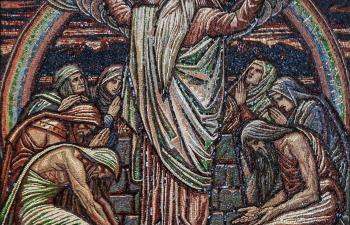
Like John the Baptist, every baptized person shares in the prophetic office of Christ (see Lk 1:76–77). But what does it mean to be a prophet? We exercise the prophetic role when we teach or seek the truth. Parents and catechists operate out of this prophetic charism when they pass the faith on to children, when they teach values that are consistent with the Gospel of Christ, and when they stand up for what is true.
Kings and Queens for the Kingdom of God
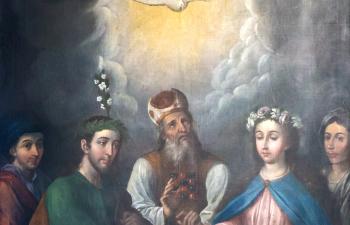
Likewise, the Book of Revelation testifies that we have been made into a “kingdom” for God our Father (Rv 1:6). Again, we must ask, what does it mean to participate in the royal aspect of Christ’s ministry? We must not be misled by the aberration of kings who have abused their power. Rather, we can look to the charitable works of Christian royalty throughout history: from Constantine the Great (d. 337) and his protection of the poor and vulnerable, his promulgation of laws reflecting Gospel values, and his construction of churches to the well-known works of the Saints Elizabeth: St. Elizabeth of Hungary (1207–1231) and St. Elizabeth of Portugal (1271–1336), who established hospitals and cared for the sick and hungry in the 13th and 14th centuries. We can think of St. Louis IX (1214–1270), whose daily works of charity in the Middle Ages supported those in need. Even in our own century we might point to the philanthropic work of Queen Elizabeth II (1926–2022). And before all of these, of course, the biblical kingship of David set the standard for “shepherding” God’s people—providing for their needs and protecting the poor and vulnerable.
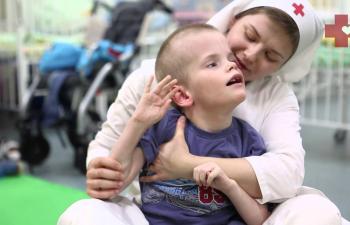
We act from this royal role when we offer comfort and care to others. Parents providing food, shelter, and clothing for their children; volunteers delivering meals to the elderly; medical professionals caring for the injured, sick, and weak—they each participate in the ministry of Christ the King.
You Are a Royal Priesthood[3]
The Catechism tells us that “Baptism gives a share in the common priesthood of all believers” (1268). But what does this mean exactly? When it comes to the priestly role, we must initially note that priesthood is not unique to Christianity, and in the history of world religions there are two main functions of a priest: First, a priest intercedes for others; second, a priest offers sacrifice.
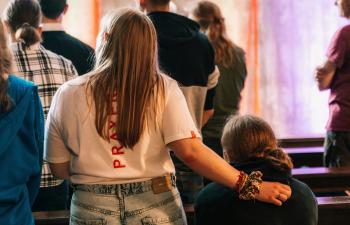
Christianity expands membership in the priestly office precisely because every baptized person is conformed to Christ, the Great High Priest. If Christians are to be “other Christs,” they must be enabled to fulfill the mission entrusted to Christ by the Father and which Jesus has shared with his disciples. It is precisely this priestly connection with Christ that enables the baptized to pray. In other words, whenever we pray, it is the sacerdotal feature of our baptism that is being engaged. Likewise, whenever we sacrifice—whether in offering ourselves or giving up something for the sake of a greater good, we are operating out of the priestly role entrusted to us and inaugurated at our baptism.
The rest of this online article is available for current Guild members.
This article is from The Catechetical Review (Online Edition ISSN 2379-6324) and may be copied for catechetical purposes only. It may not be reprinted in another published work without the permission of The Catechetical Review by contacting [email protected]